Black History Month Period SVG: A Designer's Take
As someone who spends most of their waking hours staring at stitch maps and thread charts, I approach every new digital embroidery file with a mix of excitement and skepticism. When I first pulled up the Black History Month Period Svg, my immediate reaction wasn't just about the graphic itself, but how it would translate from a flat screen into a tactile, stitched reality. In the world of Crafts and Graphics, there is often a disconnect between what looks good as a print and what holds up under the needle. This review breaks down the practical application of this design for real-world projects, focusing on everything from boutique apparel to personalized gifts.
First Impressions and Visual Personality
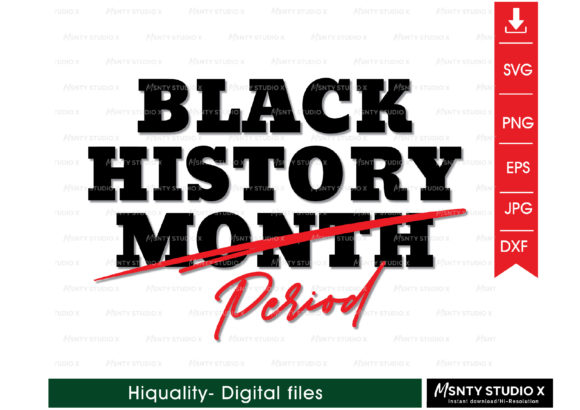
The moment you load the Black History Month Period Svg into your digitizing software or preview window, the mood is unmistakable. It carries a sense of heritage and celebration without feeling cluttered. For an embroidery designer, the layout is the first thing I scrutinize. Does the spacing allow for clean stitching? Are the lines too close together, risking a bird's nest of thread? From what I can see, the design possesses a strong visual personality that leans towards bold statement pieces rather than subtle, tiny accents. The shapes appear robust enough to handle standard fill stitch or satin stitch techniques, which is crucial for durability.
The theme naturally evokes pride and history, making it an ideal candidate for projects where the message needs to be clear and impactful. Whether you are creating a custom apparel line for a local community event or crafting a one-off personalized gift, the design's structure suggests it will stand out against various backgrounds. However, the "period" aspect of the title hints at specific stylistic elements that might require careful attention to detail during the stitching process to ensure the historical nuance isn't lost in the thread texture.
Real-World Application: The Tote Bag Scenario
To truly test the viability of any machine embroidery design, I like to imagine a specific use case. Let's say I am preparing a run of canvas tote bags for a local bookstore's Black History Month display. Canvas is a fantastic medium because it offers stability, but it also has a distinct fabric texture that can interfere with fine details. Using the Black History Month Period Svg here feels like a natural fit. The design's likely boldness would pop beautifully against a natural or black canvas.
In this scenario, the embroidery project would require a cut-away stabilizer to prevent the heavy bag material from distorting the stitches over time. If the design includes any text or intricate borders, I would be mindful of the stitch density. Too dense, and the bag becomes stiff; too light, and the canvas shows through, ruining the professional look. For a small shop product like this, the finished product needs to feel premium. The Black History Month Period Svg seems to have the visual weight necessary to elevate a simple tote into a piece of wearable art that customers would be proud to carry.
Expanding to Apparel and Home Decor
Beyond tote bags, this design shines in the realm of sweatshirt embroidery. Hoodies and crewnecks are staples for seasonal collections, and the cozy nature of fleece pairs well with the warm, celebratory vibe of the graphic. When working on stretchy fabrics like sweatshirt material, checking the hoop size and ensuring proper stabilization is non-negotiable. You don't want the design to pucker after the first wash. Similarly, for baby embroidery projects, such as a onesie or a nursery wall hanging, the design would need to be scaled appropriately. While the original file might be large, reducing it for smaller items requires verifying that the small details remain crisp and don't merge into a solid blob of thread.
For home decor enthusiasts, imagine this stitched onto a pillow cover or a kitchen tea towel. These items often undergo frequent washing, so the integrity of the embroidery file is paramount. If the design relies heavily on long satin runs without proper tacking down, it might snag easily. A thoughtful designer would consider adding underlay stitches or adjusting the angle of the top stitching to ensure longevity, especially for items meant to be heirlooms or frequent-use goods.
Technical Considerations and Potential Pitfalls
While the Black History Month Period Svg offers great potential, there are areas where caution is advised. If you plan to use this on dark fabric, you must carefully select your thread colors. High contrast is key for visibility, but sometimes the vibrancy of certain thread brands can look different under store lighting versus natural light. Always test your thread chart on a scrap piece of the actual fabric you intend to use. Furthermore, if the design features sharp corners or very thin lines, these are vulnerable points on curved surfaces like caps or hats. Embroidering on a cap requires a specific frame and often a different density approach than flat embroidery.
Another critical factor is the licensing. Since this is a digital download intended for instant use, it is vital to confirm the terms before selling commercial embroidery products. Can you sell unlimited finished items? Are there restrictions on modifying the file? As an Etsy seller or craft business owner, protecting your shop from copyright issues is just as important as the quality of your stitching. Never assume a file is free for commercial use unless explicitly stated in the product description or accompanying license file.
Designer Notes for Best Results
To get the most out of the Black History Month Period Svg, follow these practical steps before committing to your final fabric:
- Test on Scrap Fabric: Always stitch a sample on the same material and weight as your final project to check for puckering or registration issues.
- Check Contrast: View your design in black and white mockups to ensure the shapes are distinct and readable without relying solely on color.
- Review Stitch Density: If the design feels too heavy, consider reducing the fill density slightly to keep the fabric soft, especially for wearables.
- Confirm Hoop Size: Ensure your machine's hoop can accommodate the design dimensions without needing to re-hoop, which can lead to alignment errors.
- Inspect Small Details: Zoom in on the digitized version to look for tiny islands of fabric or narrow bridges that might not stitch out cleanly.
- Verify Licensing: Double-check the allowed usage rights for design assets to ensure compliance for both personal and commercial projects.
Final Verdict on Value and Appeal
Ultimately, the value of the Black History Month Period Svg lies in its versatility and emotional resonance. For an embroidery designer, it provides a solid foundation for creating meaningful products that connect with customers on a cultural level. When executed with care regarding fabric choice, stabilization, and thread selection, this design can significantly enhance the perceived value of your handmade product. It transforms a blank garment or accessory into a statement piece that speaks to history, pride, and creativity.
Whether you are stocking up for holiday embroidery sales, creating printable mockups for your online store, or making a special gift for a friend, this file offers a professional starting point. Just remember that the digital file is only half the equation; the magic happens when your machine brings it to life with precision and care. By respecting the technical requirements and understanding the material limitations, you can ensure that every stitch honors the intent of the design, resulting in a finished product that you and your customers will cherish.